

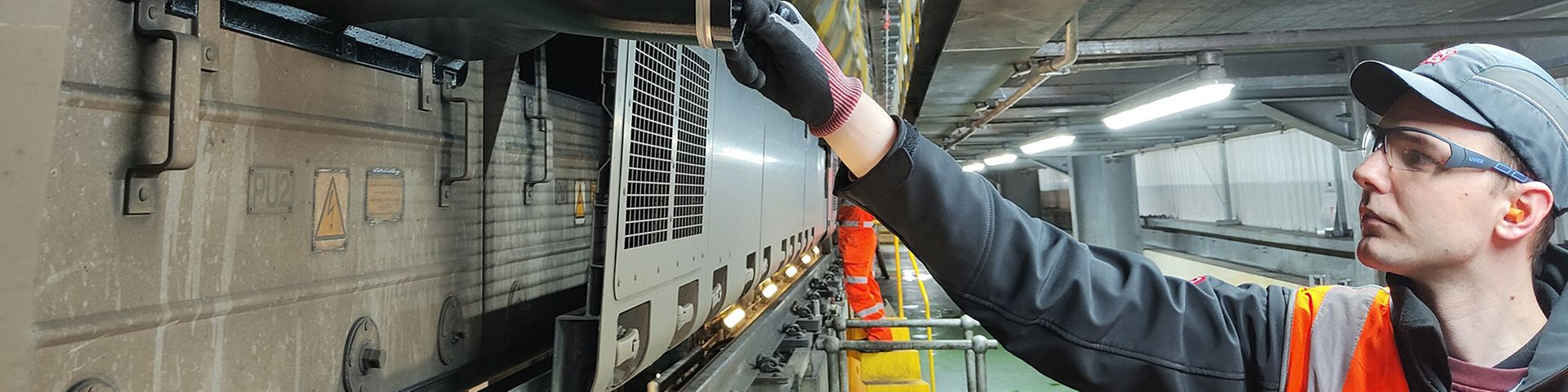
Article: How Digital Engineering is Supporting Fleet Availability

Nathan leads DB ESG’s Digital Engineering Team, applying advanced engineering expertise to tackle some of the rail industry’s most pressing challenges. The team delivers cutting‑edge solutions using a portfolio of modern technologies that are transforming how rail parts are produced and how complex engineering problems are solved.
Through capabilities such as 3D scanning, additive manufacturing and Finite Element Analysis (FEA), the Digital Engineering service adds real value for customers across the sector. These tools enable bespoke engineering solutions for parts and components, helping to address supply challenges, undertake design reviews, assess component condition, identify efficiency opportunities, and carry out precision inspections of customer assets.
Beyond Component Replacement: How Our Digital Manufacturing Service Evolved.
If you’ve worked in rail for any length of time, you’ll know that there’s one constant in our industry: the challenge of keeping fleets reliable and in service.
Since 2018, DB ESG has played a leading role in tackling one of the biggest barriers to fleet availability: component obsolescence. Our early Digital Manufacturing capability, built on 3D scanning and 3D printing, focused on replacing obsolete parts and getting trains back into service quickly, in days rather than months, often at a lower cost than traditional methods.
When we first placed 3D‑printed grab handles and armrests onto rolling stock in passenger service in 2019, the first in the UK to do so, our goal was simple: help fleet owners and operators source the parts they could no longer obtain, quickly and affordably.
But as our expertise grew, so did the nature of the problems we were able to solve.
More than Part Replacement: Digital Tools Created Additional Opportunities
The work stopped being just about manufacturing replacement parts, it became about using our new expertise to solve engineering challenges. The rail sector recognised that our mix of rolling stock expertise, together with our digital manufacturing capability could help them solve deeper issues.
Common challenges included:
- Components repeatedly failing in service because of design weaknesses.
- Maintenance tasks being inefficient or taking far longer than they needed to.
- Condition based maintenance lacking accurate, high-resolution data.
Here digital tools began offering far more than ‘replacement part’ value.
3D scanning enabled detailed analysis of components and structures – capturing wear, deformation, alignment and integrity risks. With this insight we could make detailed assessments of component condition identifying where overhaul or repair was essential. This information would also enable us to re-engineer parts to remove failure modes, extend life and improve safety, not just manufacture a like-for-like replacement.
Real Examples of Engineering Improvement
- A cab handset repeatedly breaking in service was redesigned to remove inherent weakness that resulted in failures.
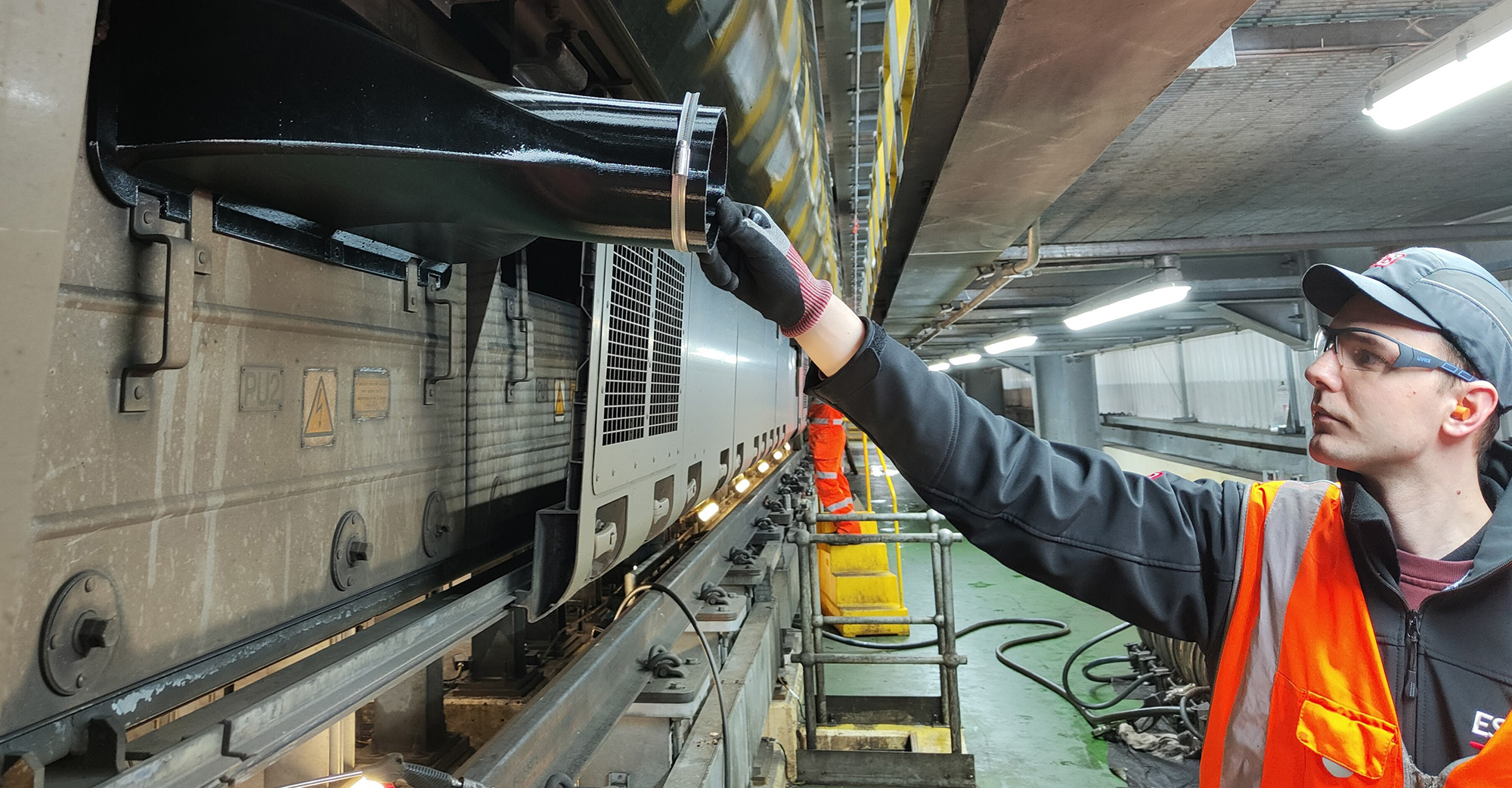
- A duct shroud was designed to enable in-situ cleaning of power units. A task that previously required heavy lifting, 4 staff and 6 hours, can now be completed in less than 1 hour, using 1 to 2 staff.
- Bespoke Jig and fixtures were developed to speed up routine depot maintenance tasks.
- 3D scanning of fuel tanks to access structural integrity and identify potential risks, proved to be so valuable that it now forms a critical part of C4 overhaul programmes.
- Large, impact resistant underframe protection panels were designed to safeguard critical systems and circuitry.
These examples are not just simply manufacturing wins — they are engineering improvements that directly lift fleet reliability and depot efficiency.
A Natural Evolution to Digital Engineering
By 2025, it became clear that what we were doing had gone far beyond the scope of Digital Manufacturing. The service had evolved into a capability that blended:
- Digital technologies.
- Advanced manufacturing.
- Detailed rolling stock knowledge.
- Advanced simulation using finite element analysis (FEA).
- Engineering problem solving.
It was no longer about replacing obsolete parts, it was about understanding:
- Why parts fail.
- How they perform in service.
- How we can design and manufacture improved, more robust solutions.
- Where digital tools can unlock better data, improved insights and faster processes.
Calling our capability Digital Manufacturing no longer did it justice, it had become much more than this, more analytical and more strategically valuable.
We had moved into a new phase, one that we refer to as ‘Digital Engineering’.
Digital Engineering Today: Insight, Improvement and Innovation
Digital Engineering now supports fleet availability in three core ways:
1. Understanding Asset Condition More Clearly
High‑resolution scanning provides data‑rich insight into wear, damage and alignment, helping operators to make informed decisions about safety, maintenance and fleet health.
2. Improving Component Performance
Re‑engineering allows failure modes to be removed, designs strengthened and materials or manufacturing methods optimised for the application and duty requirements.
3. Accelerating and Enhancing Maintenance
Digital tools streamline tasks that traditionally relied on slow, manual inspections, speeding them up, reducing labour, providing richer reporting data, enabling more effective planning.
A Capability Strengthened by the New Rail Technology Hub
The growth of Digital Engineering was a key driver for expansion of DB ESG’s facilities with the opening of the new Rail Technology Hub in Derby — a dedicated space for innovation.
This new facility has enabled us to expand our Digital Engineering Laboratory, with additional 3D printers, engineering workspace and capacity to support more projects simultaneously.
Digital Engineering now sits at the heart of a wider capability focused on helping the rail sector tackle persistent challenges with smarter, faster and more sustainable engineering tools.
From Replacement to Reinvention and Still Evolving
What began as a way to produce hard‑to‑source parts has transformed into a forward‑looking engineering discipline that helps our customers in many ways, including:
- Understand their assets better.
- Improve reliability.
- Enhance safety.
- Extend the life of fleets.
- Reduce operational and financial risk.
As digital tools advance, Digital Engineering will continue to grow, evolve - unlocking new efficiencies and possibilities for the UK rail sector.
We pleased to be at the forefront of this technology.
Interested in Reading More about Our Digital Engineering Service, please follow the link below - Digital Engineering
 Go
Go